.webp)
A retinal detachment is a serious eye condition where the light-sensitive layer at the back of your eye (the retina) separates from its underlying support layer. This can lead to permanent vision loss if left untreated. While there isn't a single "most effective" treatment universally applicable to all cases, the optimal approach depends on several factors:
Existing eye conditions or systemic diseases can influence treatment options and recovery.
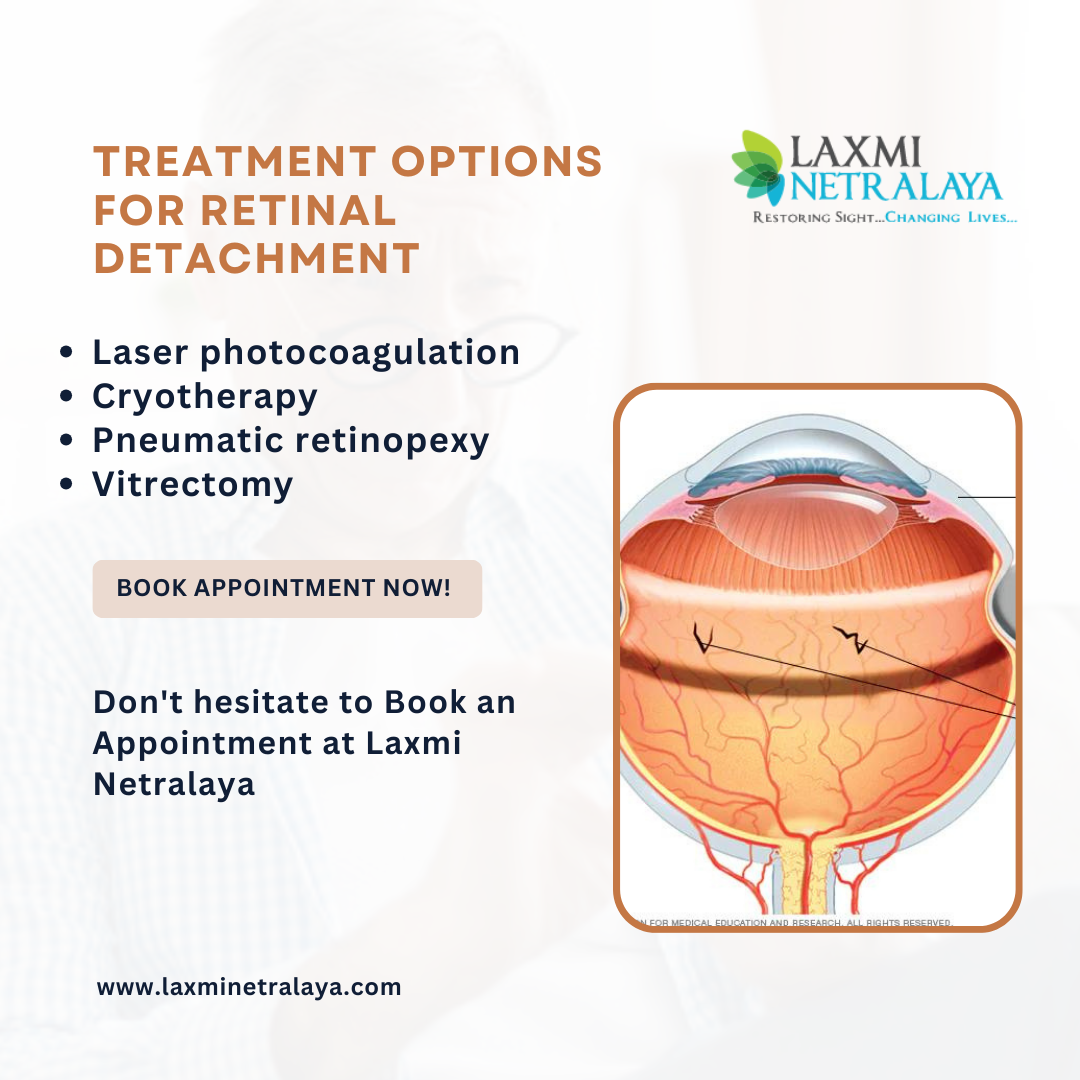
Considering these factors, the most common and effective treatment options for retinal detachment include:
Located in Patna, Bihar, Laxmi Netralaya Hospital offers comprehensive ophthalmic care, including advanced vitreoretinal surgery for treating retinal detachments. Their team of experienced vitreoretinal surgeons utilizes cutting-edge technology and techniques to provide personalized treatment plans for optimal outcomes.
Visit: www.laxminetralaya.com
Book your consultation online! ï¸
https://www.laxminetralaya.com/book-appointment