
Keratoconus is a progressive eye condition that causes the cornea, the clear front part of the eye, to thin and bulge. This can cause blurred vision, light sensitivity, and double vision. Keratoconus is most common in people in their late teens and early twenties, but it can develop at any age.
Early symptoms of keratoconus can include:
As keratoconus progresses, the cornea can become more distorted, leading to more severe vision problems.
The exact cause of keratoconus is unknown, but it is thought to be caused by a combination of genetic and environmental factors. People with a family history of keratoconus are more likely to develop the condition. Other risk factors include allergies, eye rubbing, and certain eye conditions, such as dry eye and retinitis pigmentosa.
Keratoconus is typically diagnosed during a routine eye exam. Your eye doctor will perform a variety of tests, including a corneal topography (topography) test, to measure the shape and thickness of your cornea.
Treatment for keratoconus depends on the severity of the condition. In the early stages, glasses or soft contact lenses may be sufficient to correct vision. However, as keratoconus progresses, rigid gas permeable (RGP) contact lenses or scleral lenses may be necessary. RGP and scleral lenses are specially designed to vault over the cornea and provide a smooth optical surface.
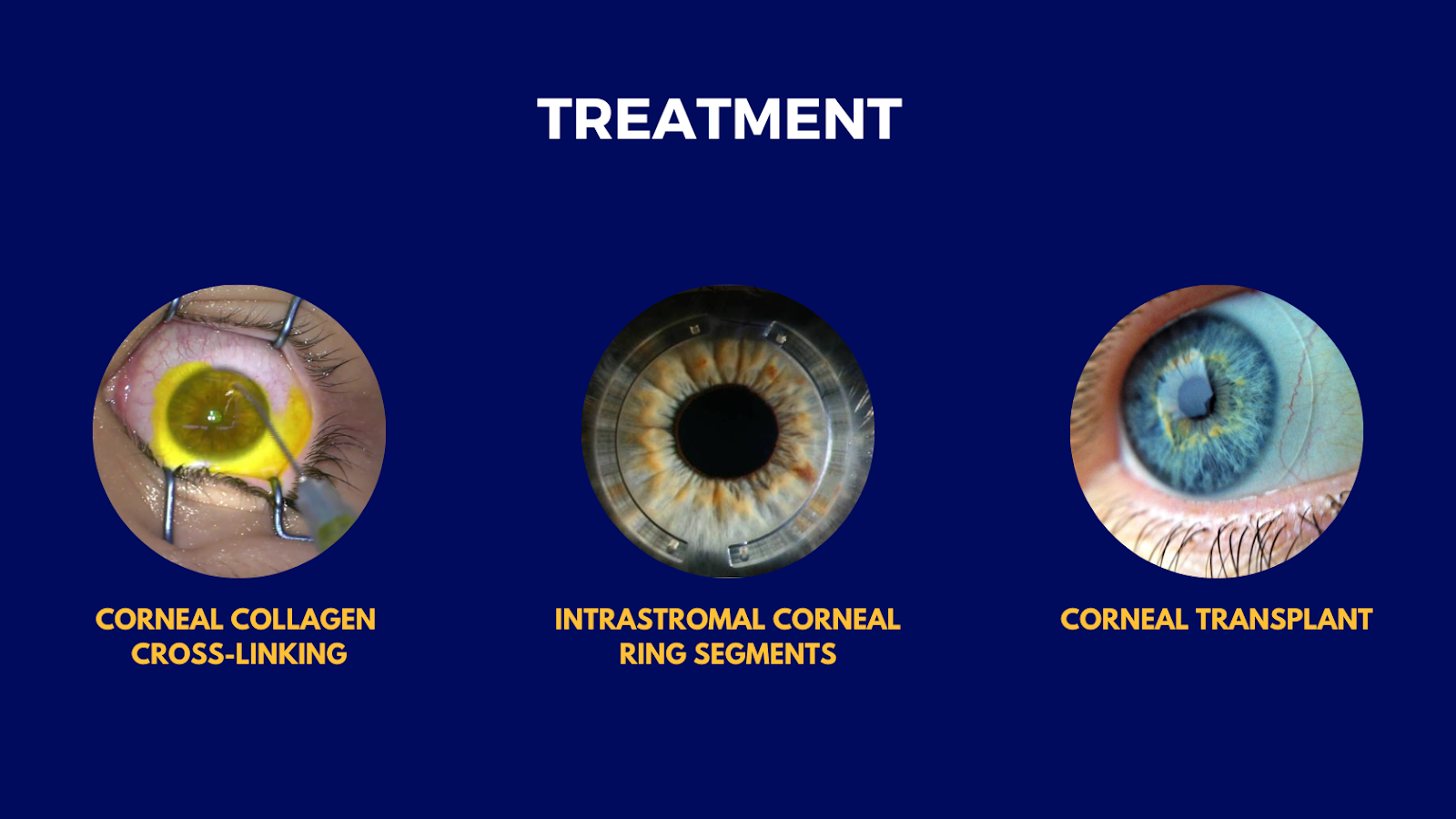
If contact lenses are not tolerated or do not provide adequate vision correction, surgery may be an option. There are a variety of surgical procedures available to treat keratoconus, including:
Corneal transplant: If the cornea is severely damaged, a corneal transplant may be necessary. This procedure involves replacing the damaged cornea with a healthy donor cornea.